
Does Shipment Pickup Mean It Has Departed?
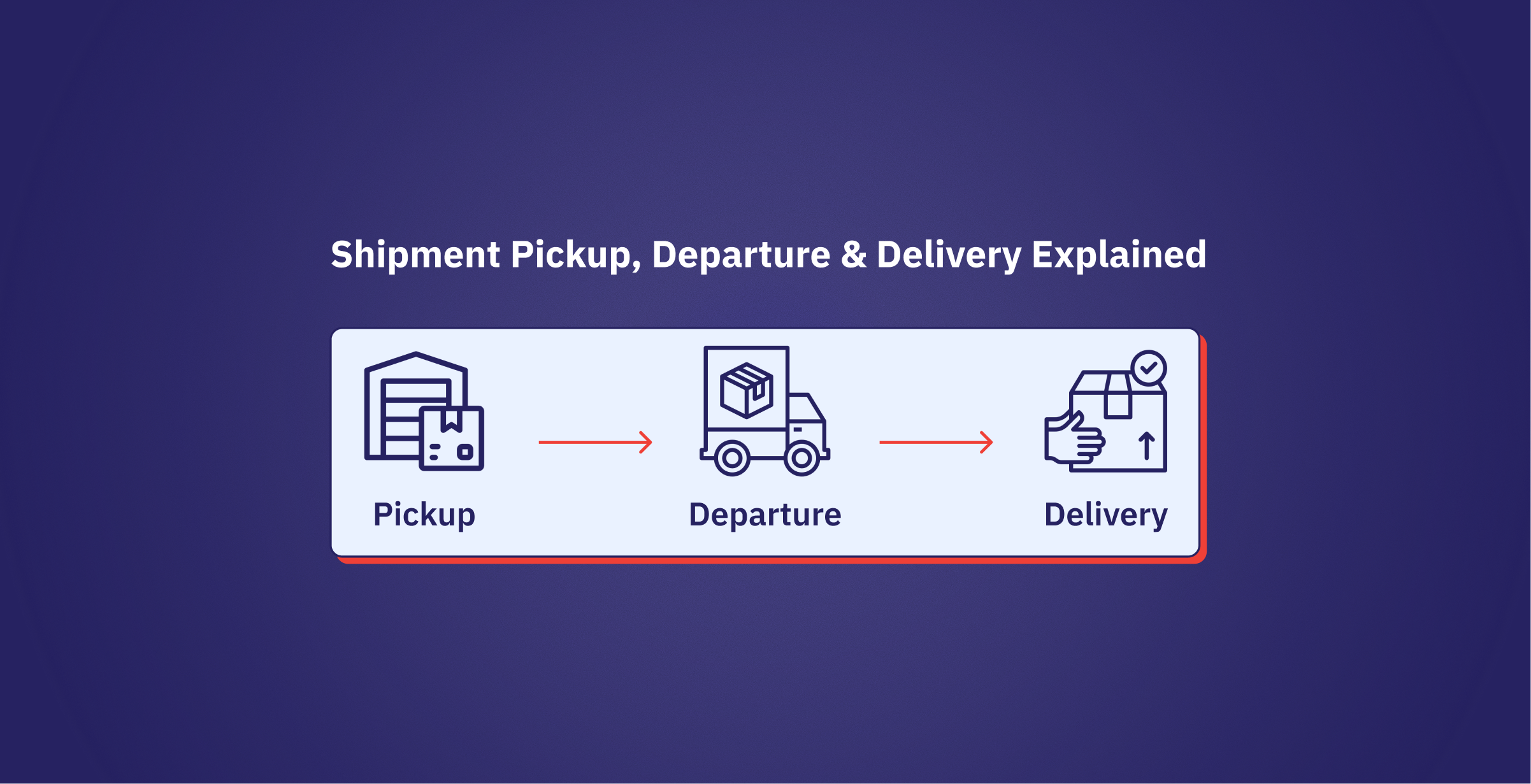

When you hand a shipment over to a carrier, its journey moves into a new stage. However, collection from your premises does not necessarily mean it has departed for its destination.
Between pickup and final delivery, a shipment may pass through sorting, data checks, consolidation, transportation, and local distribution. These stages vary depending on the service, route, and shipment type.
Understanding the difference between pickup, departure, and delivery helps your business plan more accurately, track progress, and communicate clearer timelines to customers.
What Does Shipment Pickup Mean?
Pickup is the point at which the carrier collects the shipment from your premises or accepts it at an approved drop-off location.
At this stage, the carrier takes possession of the shipment under the service’s procedures. It may then verify the shipment details, weight, and dimensions before moving it to a sorting or processing facility.
A “Picked Up” status confirms this step has been completed. It does not, on its own, confirm departure for the recipient’s city or country.
Tracking terms vary between carriers, so check the status description when clarification is needed.
What Does Shipment Departure Mean?
Departure is the point at which a shipment leaves a facility or transport hub for the next location on its route.
For international shipping, this may mean leaving the origin country or a transit hub. For domestic shipping, it may mean leaving a sorting facility for another city.
Since a journey can include several stops, a “Departed” status may appear more than once. Check which location the shipment has left and where it is heading next, rather than assuming it is about to be delivered.
What Does Delivery Mean?
Delivery is the point at which the shipment reaches the recipient or designated receiving party and the handover is completed under the service’s procedures.
This differs from arrival at the destination city, airport, or distribution facility. After arrival, the shipment may still need customs clearance, local sorting, delivery scheduling, or preparation for dispatch with a delivery driver.
When discussing a shipment’s arrival date, clarify whether it refers to arrival at a transport facility or delivery to the recipient’s address.
Why Can There Be a Gap Between Pickup and Departure?
1. Shipment Acceptance Cut-Off Times
A service may have a deadline for accepting shipments onto a particular departure. If collection takes place after that deadline, the shipment may be prepared for the next available departure.
Alongside the driver’s collection time, confirm the latest handover time required for the intended service.
2. Sorting and Consolidation
The carrier may move the shipment to a facility where parcels are sorted by destination and service before being prepared for transportation.
The time required depends on the service’s processes, operating schedules, and route. Two shipments collected on the same day may therefore depart at different times.
3. Checking Shipment Details and Contents
The carrier may need to confirm an address, correct information, check weight and dimensions, or verify that the contents are accepted.
Some shipments also require documents or approvals before transportation can proceed. Providing accurate information from the start helps reduce queries and adjustments during processing.
4. Transport Schedules and Available Capacity
Shipment movement may depend on scheduled flights or trucks and the capacity available for the selected service.
Express and economy services can have different arrangements, while transport options may vary by destination. Confirm the expected departure when your shipment is tied to an important business deadline.
When Does the Quoted Delivery Time Start?
The starting point for calculating delivery time depends on the provider’s terms. It may begin at pickup, acceptance after all requirements are met, departure, or another stage specified in the quote.
The timeframe may also be stated in business days, with exclusions relating to holidays, customs clearance, or operating conditions.
Before relying on a quoted timeframe, ask:
- At which stage does the delivery timeframe begin?
- Is it calculated in business days or calendar days?
- Does it include customs clearance and delivery to the address?
- Is it an estimate or a time commitment with specific conditions?
These details provide a clearer basis for agreeing on an expected delivery date with your customer.
A Practical Example: Collected Today, Departing Tomorrow
Suppose a business prepares a spare part, and the carrier collects it after the cut-off for that day’s departure.
The tracking status changes to “Picked Up.” The part is then moved to a sorting facility and prepared for the next departure. After reaching the recipient’s city, it still needs local sorting before going out for delivery.
This example includes three separate milestones:
- Pickup: The carrier takes possession of the shipment.
- Departure: The shipment leaves for the next location on its route.
- Delivery: The recipient receives the shipment.
Understanding these stages in advance helps the business assess whether the service fits its maintenance schedule, rather than planning around the pickup date alone.
How Can You Track Your Shipment More Accurately?
Read the Status Alongside the Location and Date
Check the timestamp and location associated with each update. “Shipment Arrived” becomes more useful when you know whether it has reached a transit hub or the distribution facility in the recipient’s city.
Identify the Next Expected Step
After pickup, check the expected departure if needed. Once the shipment reaches its destination, confirm whether it is awaiting clearance or being prepared for delivery.
This keeps follow-up focused on the next action required.
Prepare the Recipient Before Arrival
Make sure the address and contact number are correct and that the recipient is ready to coordinate delivery or provide any required information.
This is especially important when sending equipment or devices to sites that require entry permits, receiving appointments, or unloading arrangements.
Request Clarification When the Expected Timeframe Is Exceeded
If tracking does not progress within the timeframe indicated by the provider, contact them with the shipment number and latest visible update. Ask for the current stage and the next expected step.
A lack of an immediate tracking update is not enough, on its own, to establish the cause of a delay or the shipment’s actual location.
What Should You Tell Your Customer?
Use wording that matches the confirmed stage. Once the carrier has collected the shipment, tell your customer it has been handed over to the carrier. Share tracking information and the estimated delivery date when available.
Avoid treating pickup as confirmation of departure or arrival in the destination city as completed delivery. Accurate updates help customers prepare and reduce confusion while they wait.
Clearer Shipment Tracking with Waared
Waared brings shipment tracking from multiple carriers into one platform, helping your business review statuses and organize follow-up.
When choosing a service, identify when the shipment needs to arrive and review collection timing, estimated transit time, and delivery terms before confirming the booking.
Share your shipment details and request a quote through Waared that suits your business needs and timeline.