
Shipping Management for Businesses: From Chaos to Full Control

Shipping Management for Businesses: From Chaos to Full Control
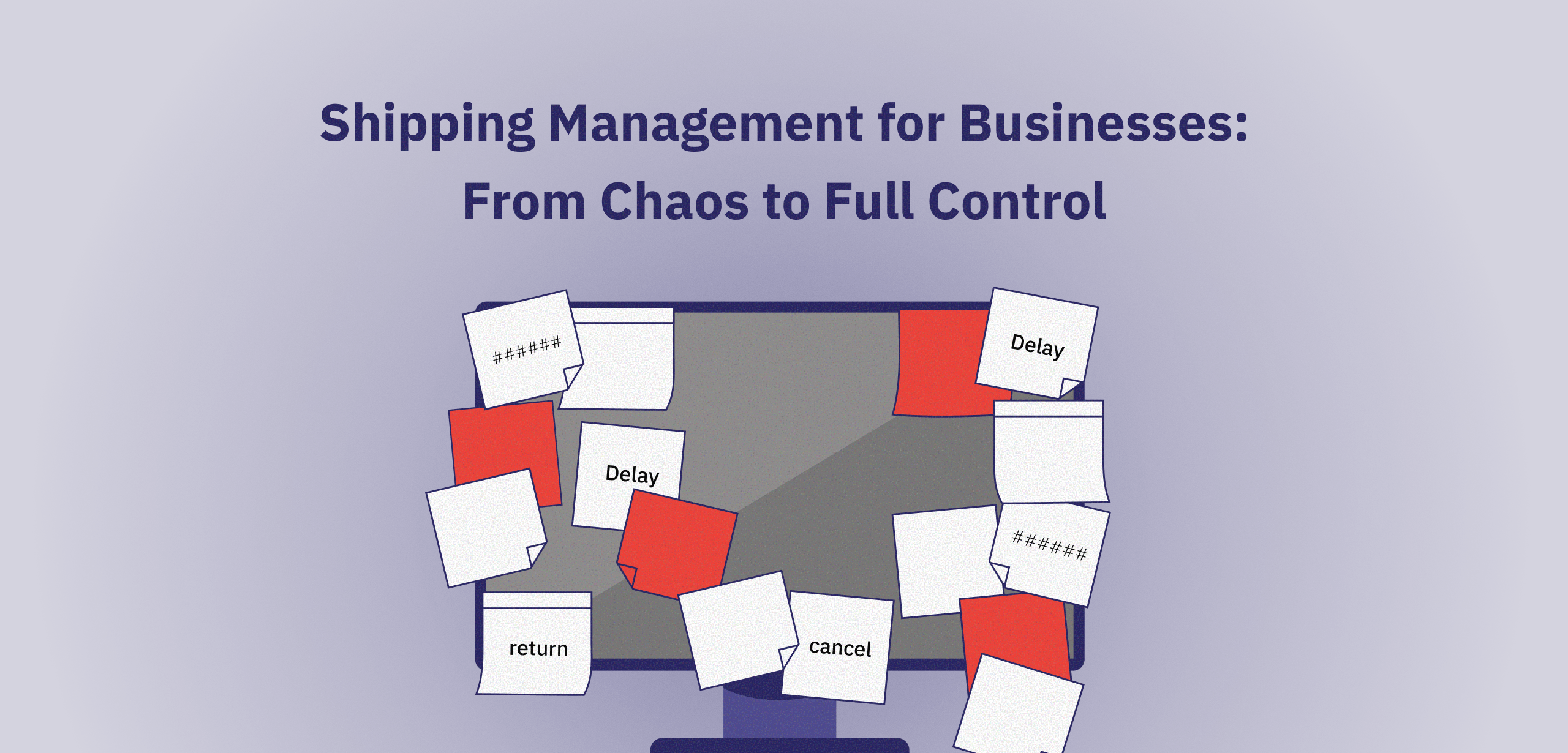
As businesses grow and order volumes increase, shipping management transforms from a simple task into a complex daily operation. What starts with coordination with one carrier often ends in operational chaos that's difficult to control. Teams spend hours tracking shipments, entering data manually, and coordinating with multiple shipping providers, while errors and costs quietly accumulate in the background. The real question is: how do you move from that chaos to a clear, reliable system you can depend on?
Where Does Shipping Chaos Begin?
Managing Multiple Carriers Without a Unified System
When your company relies on more than one shipping provider, you face different systems and multiple booking and tracking methods. Each carrier has its own platform, requirements, and point of contact — making unified operations difficult and exhausting for your team, which deals with this fragmentation every single day.
Fragmented Tracking and Loss of Big-Picture Visibility
When every shipment lives in a different system, you're forced to log into multiple platforms just to check order status.
This fragmentation costs you the comprehensive view of your operations and slows down decision-making significantly. In many cases, a manager doesn't know whether a shipment has arrived until an unhappy customer calls to complain.
Manual Data Entry and Repeated Errors
Manually entering shipment data over and over consumes your team's time on unproductive tasks and increases the risk of errors — wrong addresses, missed deliveries, and costly corrections.
One address mistake can cost your company return shipping fees and a frustrated customer who may never return.
Lack of Cost Transparency and Rate Visibility
Without clear rate comparison across shipping carriers, your financial decisions become guesswork.
Hidden costs accumulate over time and quietly eat into your profit margins. Companies that don't regularly compare shipping carrier rates often pay more than necessary without even realizing it.
Difficulty Scaling as the Business Grows
Manual methods that work with 50 shipments per month completely collapse at 500.
Companies that don't build proper systems from the start find themselves in growing chaos as they scale — and that's exactly what you want to avoid.
What Does Full Shipping Control Look Like?
Companies that manage shipping effectively share several clear traits:
- A unified view of all shipments from one dashboard
- Decisions based on real-time, accurate data
- Minimal manual intervention through automation
- Flexibility to choose the right carrier based on speed, price, and destination
The fundamental difference isn't the volume of operations — it's how those operations are managed.
The Real Shift: From Scattered Tools to One Platform
Many businesses start with spreadsheets, emails, and multiple systems. Over time, they discover that this fragmented approach doesn't scale with growth and doesn't solve operational chaos.
The real solution is bringing everything together on a unified shipping platform like Waared.
With a single platform, companies can:
- Manage multiple carriers from one place
- Compare shipping rates instantly
- Track all shipments in real time
- Reduce operational errors significantly
No more switching between different systems or contacting each carrier separately.
What Actually Changes After Organizing Shipping Management?
The impact goes far beyond saving time.
After adopting a unified shipping management system:
- Daily operational workload decreases significantly
- Errors become rare instead of frequent
- Teams work more efficiently
- Decisions become data-driven instead of guesswork
Most importantly, shipping management transforms from a daily operational burden into a stable, scalable process that grows with your business.
Practical Tips for Moving from Chaos to Control
If your company's shipping operations feel out of control, start with simple and structured steps.
First, unify your visibility across current shipments and understand exactly how much you spend on shipping compared to what could potentially be saved.
Second, identify where time and money are being lost. Where do errors happen most often? Which processes consume unnecessary time?
Third, look for a solution that brings all your carriers into one place while offering automatic comparison and shipment tracking.
You don't need to change everything at once. Starting with the right system makes a major long-term difference.
Questions You Should Ask Yourself Right Now
- Does your team spend significant time on manual shipping tasks that could be automated?
- Do you know exactly how much each shipment costs compared to available alternatives?
- Do you have real-time visibility into the status of all shipments?
If the answers are unclear, your shipping management likely needs restructuring.
Conclusion
Shipping chaos isn't a permanent problem it is simply the result of missing the right system.
When operations are scattered across disconnected tools and platforms, decisions become harder, costs increase, and errors multiply.
When everything is brought together under a unified shipping platform, control becomes clear, measurable, and scalable.